 Paw Home Lab
Cat interiors Cats
Plan cat height options without guessing installation safety
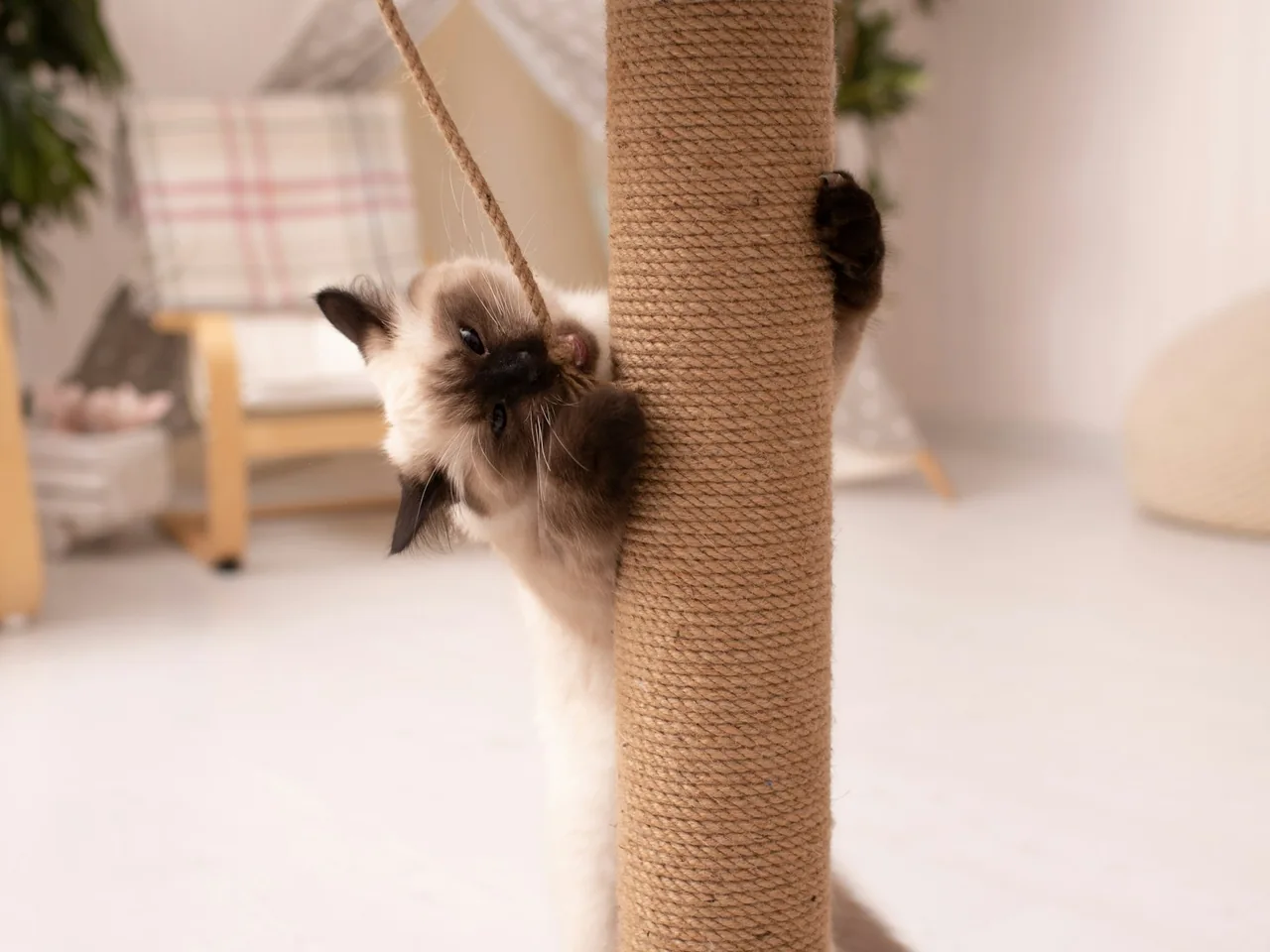
Context photograph.
Separate the behavioural opportunity from the structural decisions that need real product evidence.
Explore the roomDefine the opportunity you want to offer
Cats living indoors need opportunities for behaviours such as climbing, hiding and scratching. Begin by identifying which opportunity is missing and where it could connect to existing routes. Height is not useful if the approach is awkward or the animal has no comfortable way to leave.
Draw a concept plan only. It cannot establish a wall's construction, a fixing's capacity or the suitability of a platform. Use purpose-designed equipment and the manufacturer's installation information, with qualified help where needed.
Ask access questions before purchasing
- Where does the cat begin the approach, and what lies around it?
- Can doors, curtains or furniture change the route unexpectedly?
- Is there an appropriate resting or retreat option after the approach?
- What installation and inspection requirements does the actual product specify?
- Could another animal occupy the only route in or out?
Avoid improvised obstacle courses
Do not stack unstable furniture or assume a sequence of household objects is a suitable climbing structure. An attractive sketch can conceal unsecured surfaces, gaps and incompatible materials. Keep structural design decisions with evidence about the actual installation rather than an illustration on this site.
Once appropriate equipment is safely installed, let the cat investigate voluntarily. Do not place it on a high surface to force a demonstration. Record spontaneous use and preserve accessible alternatives.
Review the route over time
Furniture moves and storage accumulates. Revisit the approach and departure route during ordinary room checks, and inspect equipment as instructed. If the cat changes how it moves or avoids an established route, seek individual advice rather than assuming the answer is a higher or more complicated arrangement.
The zone planner is for naming locations and recording questions. It gives no construction dimensions, load ratings or therapeutic recommendations.
Sources & practical application
These principles inform the guide. Household worksheets, examples and sequencing are our editorial application, not reported experiments or endorsements by the source organisations.
Source principle: Indoor life requires opportunities for play, climbing, hiding, scratching and access to essential resources.
Source principle: Distribute resources, avoid busy bottlenecks and consider the route a cat uses to reach each location.
Checked October 16, 2026. How we prepare guides · Report a correction.